“If I hadn’t quite got why this mild coffee is so sought after beyond its kudos of rarity, then my first sip of his espresso is an oral Catherine wheel as the bolder intensity triggers wondrous citrusy notes. Even Napoleon, with all his bristling Gallic disdain, may have nodded with satisfaction.”
Mark Stratton writing about the coffee grown, processed and roasted on our Wrangham’s plantation, in the Daily Telegraph newspaper, 11 December 2023

Coffee on St Helena: coffee seeds were introduced to St Helena in February 1733 on the East India Company ship ‘Houghton’, travelling from Mocha in Yemen. The variety is green-tipped Bourbon Arabica, so named because it was the variety that French missionaries exported to Reunion Island (then called Bourbon Island) at around the same time. Today, high quality Bourbon Arabica can be found elsewhere in the world, but on St Helena it has remained a pure, single-origin strain.
Coffee at Wranghams: when we bought the property in 2014 we discovered an overgrown coffee plantation – only around 30 bushes had survived, which we pruned back and cultivated, and then planted around 350 more from the saplings that had grown at the base of the existing plants . Wranghams is about 520 metres above sea level, which is quite low for Bourbon Arabica, but the mild climate of around 15-25 celsius, the volcanic soil, and the high levels of rainfall, all combine to make it an ideal growing environment.
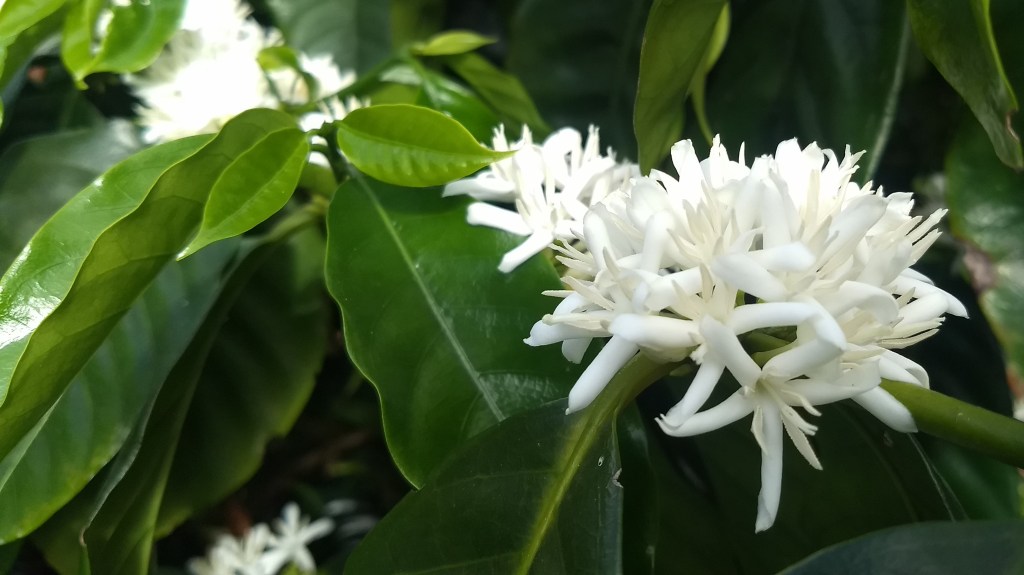
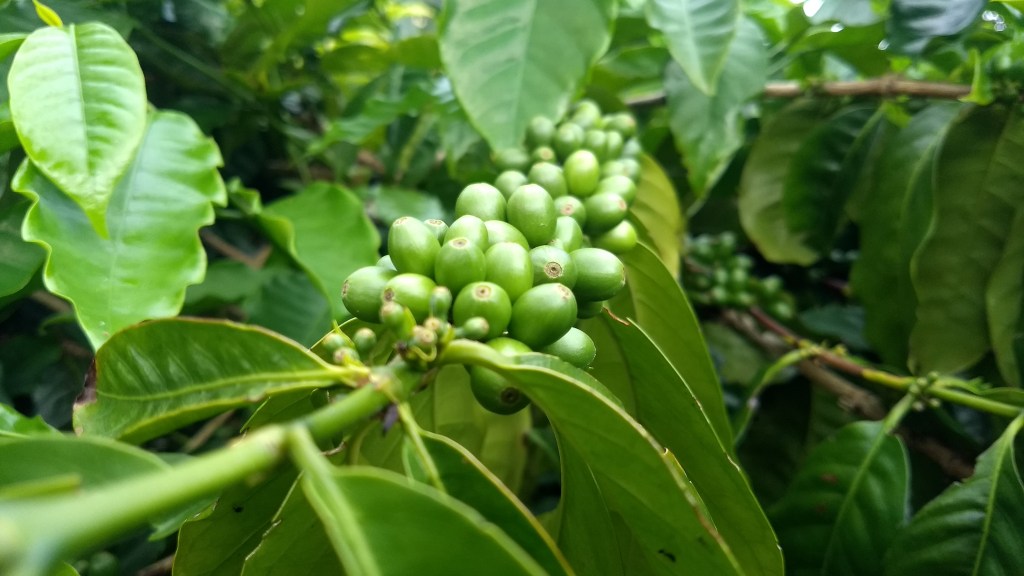
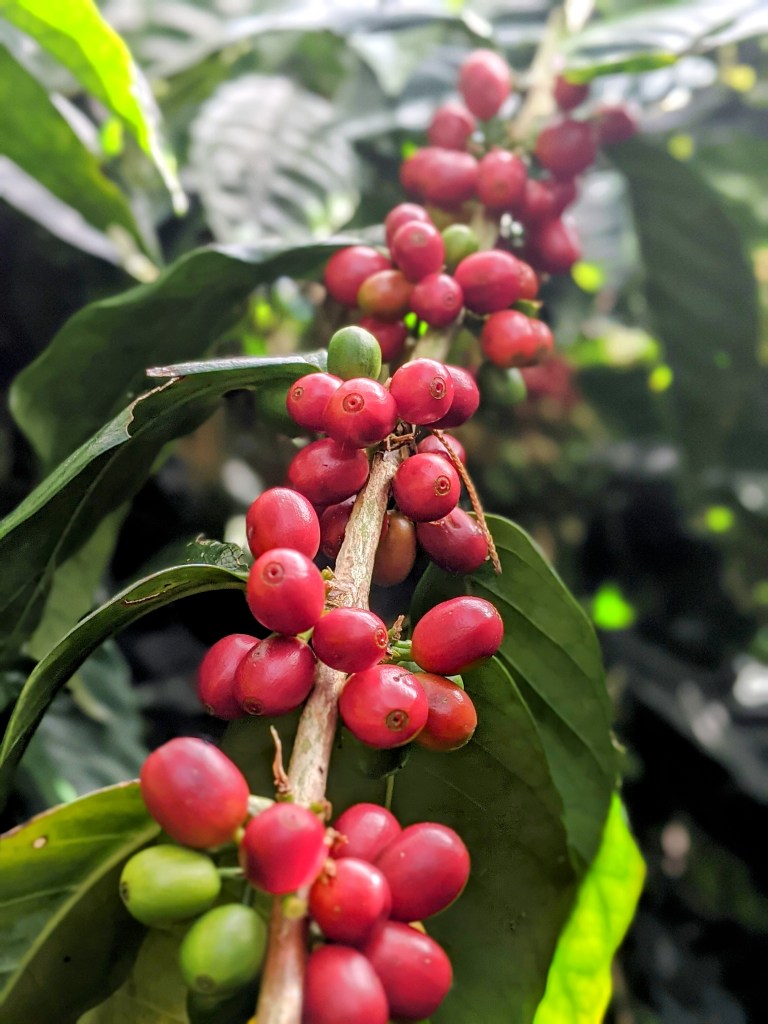
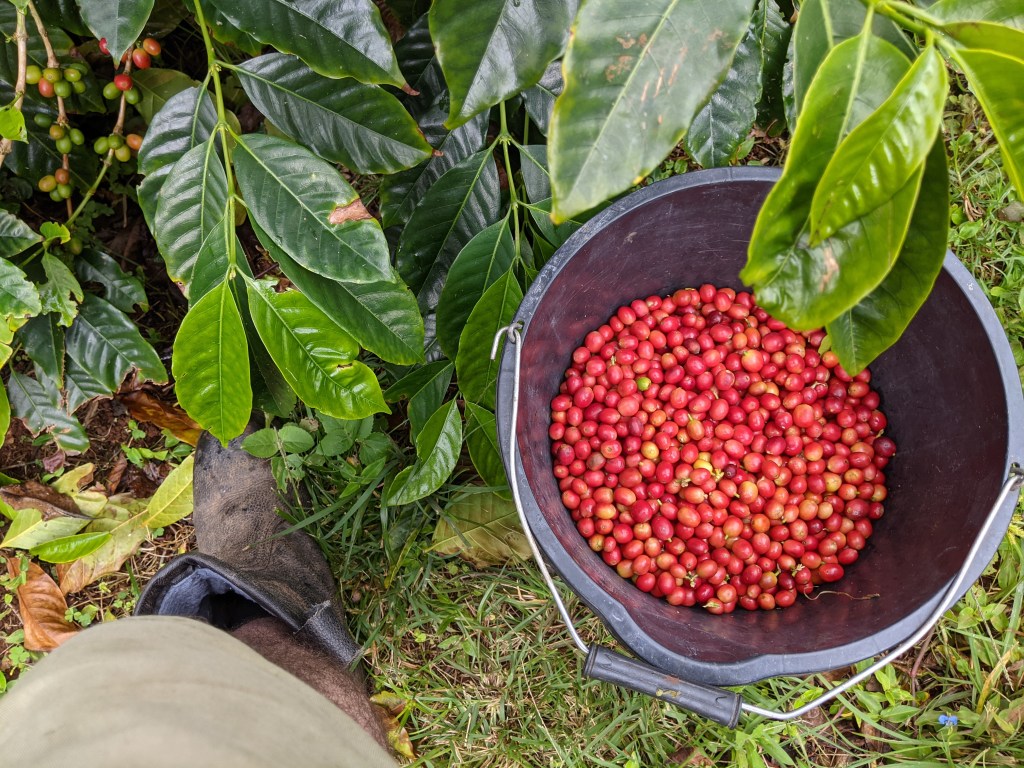
Growing, flowering, and fruit development: we keep the bushes at about five or six feet in height – which promotes fruit production, and means that we can reach the cherries to pick them. Bushes take about three to five years to start flowering and bearing fruit; flowering usually occurs from mid to late summer (February/March), beautiful and delicate white summer flowers surrounded by lush green shoots and growth. The mostly self-pollinate, and small green berries start to form, and develop over the winter. In late spring and early summer they start to ripen, and picking the ripe red cherries typically runs from November to around February. Flowers only form on new growth, so after picking we prune the bushes to encourage it, and to get rid of the vertical runners that otherwise form. If left to their own devices, coffee bushes will grow to 30 feet or more.
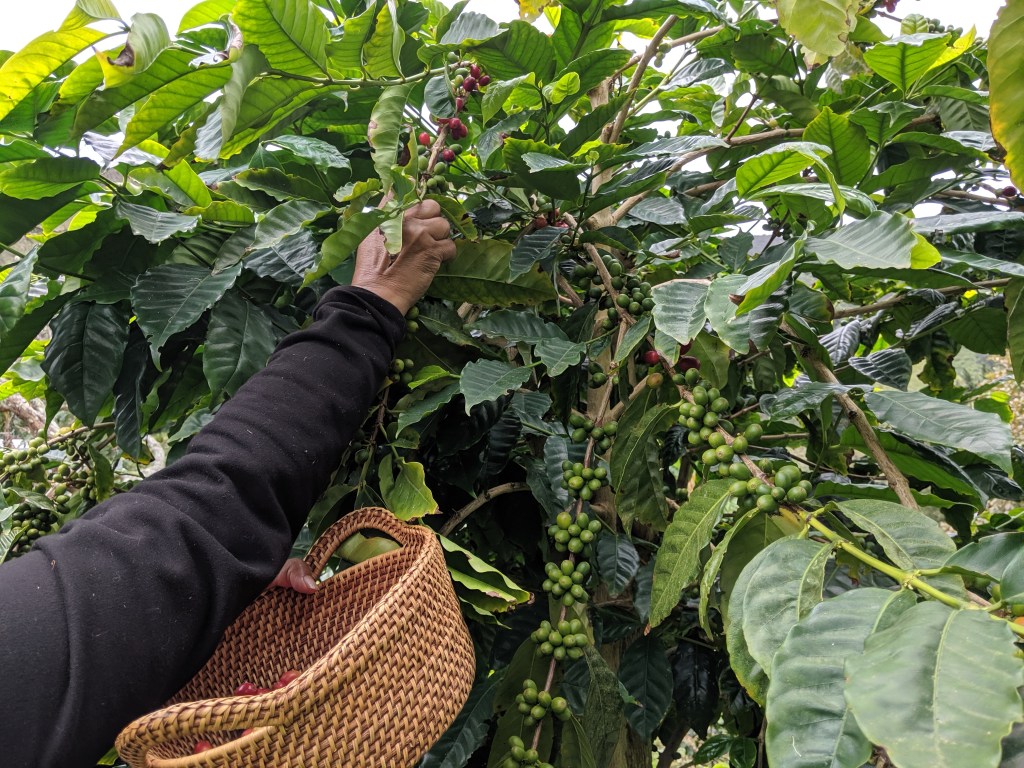
Processing the coffee: coffee beans have to be picked, pulped, fermented, washed, dried, hulled, polished, winnowed, and graded. Four skins are removed: the cherry, the mucilage, the parchment, and the silverskin.
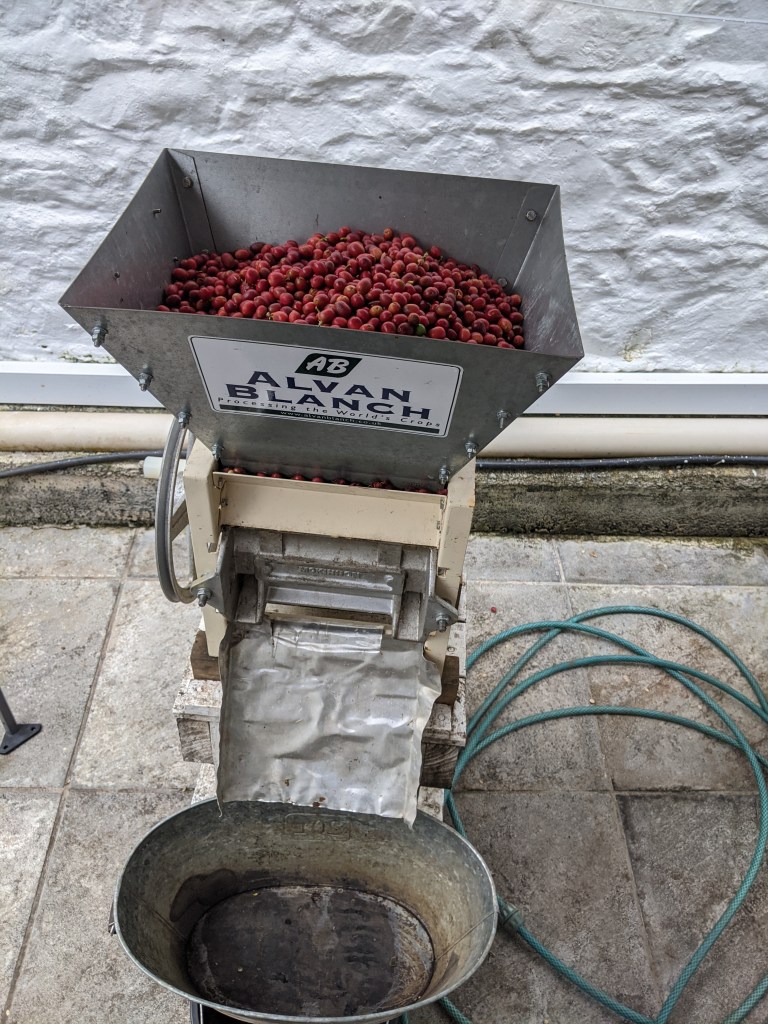
Picking and pulping: once the season starts, coffee picking by hand takes place daily. It’s important to only pick the cherries that are ‘post-box’ red, and they only stay that colour for a few days. After picking, the berries are pulped – which means mechanically removing the red cherry skins using a hand pulping machine to gently squeeze the cherries and scrape the skins off. Skins are not wasted, we compost them for the garden.
Fermenting and washing: on St Helena, all the plantations use the wet processing method of extracting the beans from the cherries. This compares to dry processing, which typically involves drying the beans without removing the cherry skin first. In wet processing, after pulping, the beans are washed and fermented to remove the slimy sugary mucilage which covers the beans. We put the beans in small baths full of water, changing the water each day for about a week until the beans feel gritty to the touch.
Drying, hulling, polishing and winnowing: we set the wet beans out on drying racks, either in the sun, or in our polytunnel; the beans need to be at around 11% moisture content to be hulled (that is, have the hard parchment skins removed). Dry beans don’t break easily during the hulling process, and they have less tendency to go mouldy. We check the water content every day with a moisture meter, and then we hull the beans and polish them to remove the silverskin, which is the fine coating which covers the beans. We have a hand huller/polisher which does a great job but which is a bit slow – the government also has motorised hulling and polishing machines at their coffee processing centre at Scotland, which we can also use. Winnowing is the process of removing the loose parchment from the beans, by dropping the mixture in front of a fan – the parchment blows away, and the beans fall into a bucket.
Grading: the final stage of processing the beans before roasting is grading, which means manually sorting the beans into different sizes. We use three stainless steel sieves, each with carefully drilled holes set at precise diameters: in our case 14/64, 16/64, and 18/64 of an inch (5.5, 6.5, and 7.5 mm), which gives us small, medium and large beans. Having a uniform size is very important for roasting, to avoid singeing (of small beans) and under-roasting large beans. The smallest beans tend to be peabody – which are whole beans which haven’t split into the more typical two half beans.
Roasting: this is probably the most sensitive and difficult part of the process. We use a small gas propane roaster (the ‘Cormorant’) which produces about 0.5kg of roasted coffee for each roast – it’s hand-made to order by a small company in Cornwall, UK. The beans roast in a heated rotating drum – the beans drop into the drum at about 220 celsius, which then cools to about 100 celsius, and then gradually heats up again to 200 celsius using a steady rate of rise of about 10 degrees per minute. At about 170 degrees the beans start to crack as the gas escapes the beans, something similar to popcorn. This is called ‘first crack’; at around 220 degrees, the beans crack again, called ‘second crack’. Coffee will have its distinctive taste after the first crack, but leave it too long after the second crack and the beans will burn. We check the progress of the roast through the glass window in the roaster, and with a ‘tryer’. Once the beans are roasted we drop them into a cooling tray, to stop them continuing to roast as soon as possible. We usually monitor the temperature of the beans with a ‘roasting profile’ using the Artisan roasting software, controlling the gas pressure, the air flow, and the drum speed to try and ensure a uniform rate of rise for each roast.
 Wranghams